

English Words Pronounced Differently: Why It Happens 🔊
Beginner Level | April 23, 2026
혼자서 기사를 소리 내어 읽거나 튜터를 따라 각 단락을 반복해서 읽으세요. 레벨...
Why English Can Feel Strange
English can feel a little strange sometimes. You read one word and think you know how it should sound, but when a native speaker says it, it sounds completely different. That can be frustrating for English learners, especially busy professionals who want to speak clearly and confidently at work. The good news is that there is usually a reason behind it.
English Comes from Many Places
Many English words come from different languages. English borrowed words from French, Latin, Greek, German, and many other languages over time. Because of that, spelling and pronunciation do not always match in a simple way. One word may follow one sound pattern, while another word may follow a completely different one. English is a bit like a big family reunion—every cousin showed up wearing a different outfit.
Why English Words Pronounced Differently Can Feel Confusing
History Changed the Sounds
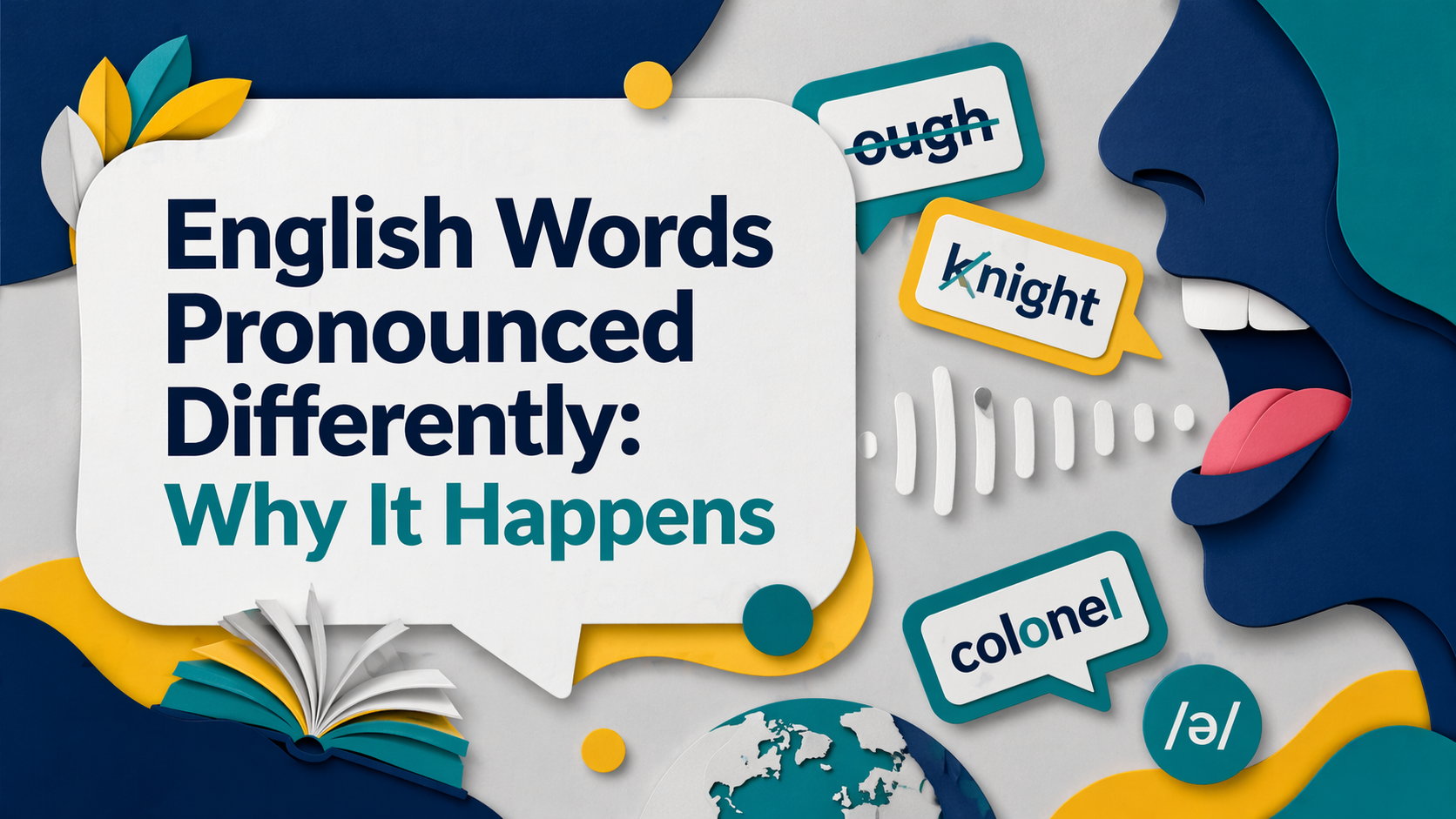
One big reason is history. A long time ago, people pronounced many English words more closely to the way they were spelled. Over the centuries, pronunciation changed, but spelling often stayed the same. That is why words like knight, through, and debt can look confusing to learners today. The letters are still there, but some of the sounds have become quiet or disappeared.
Silent Letters Cause Trouble
Another reason is that English has many silent letters. Think about words like write, comb, or island. Native speakers do not pronounce every letter, and learners usually have to memorize these patterns little by little. It may seem unfair at first, but the more you listen and repeat, the more these patterns start to feel natural.
Accent and Region Matter Too
Pronunciation can also change depending on where the speaker is from. A person from the United States, the United Kingdom, Australia, or South Africa may pronounce the same word in slightly different ways. Even inside one country, accents can change from city to city. That means you are not always hearing “wrong” English—you are often hearing a different version of correct English.
Why This Matters at Work
This is important for professionals. In international business, you may hear English from many different countries, not just one. If a coworker says a word differently from your textbook or app, do not panic. Try to focus on the context, the key sounds, and the meaning. Listening to a variety of speakers will help you become more flexible and confident.
How to Improve Your Pronunciation
The best way to improve is to connect your eyes, ears, and mouth. First, listen carefully to how a word is said. Then repeat it aloud several times. After that, use the word in a short sentence. This kind of practice helps build muscle memory, and that makes speaking easier over time. Reading aloud is also a smart move because it helps you notice where your pronunciation feels weak or uncertain.
Learn Related Words Together
You should also learn words in groups. For example, words like sign, design, and signal are related, but they are not pronounced exactly the same way. When you study families of words together, you begin to notice patterns more quickly. Over time, English pronunciation stops feeling random and starts feeling more familiar.
Keep Going Step by Step
So yes, English words pronounced differently can feel confusing, and yes, English can be a bit mischievous. But that does not mean you cannot master it. With regular listening, repetition, and real speaking practice, you will start to hear the logic inside the chaos. Keep going, keep reading aloud, and let your ears do more of the heavy lifting.
Vocabulary List
- Borrow (verb) — To take and use something from another source.
Example: English borrowed many words from French and Latin. - Pattern (noun) — A repeated way that something happens or is arranged.
Example: She noticed a sound pattern in similar English words. - Silent (adjective) — Not spoken or not making a sound.
Example: The b in comb is silent. - Pronunciation (noun) — The way a word is spoken.
Example: Good pronunciation helps people understand you more easily. - Accent (noun) — A particular way of pronouncing words, often linked to a region.
Example: His accent changed after living abroad for several years. - Region (noun) — A particular area of a country or the world.
Example: People from each region may pronounce words differently. - Context (noun) — The situation or surrounding information that helps explain meaning.
Example: The context helped her understand the unfamiliar word. - Repeat (verb) — To say or do something again.
Example: Repeat the sentence after the speaker. - Memorize (verb) — To learn something so you can remember it.
Example: He tried to memorize common silent-letter words. - Flexible (adjective) — Able to change or adjust easily.
Example: Strong listeners are flexible when they hear different accents.
5 Questions About the Article
- Why are some English words pronounced differently from how they are spelled?
- What is one reason English spelling and pronunciation do not always match?
- Why do silent letters make English difficult for learners?
- How can different accents affect pronunciation?
- What are three steps the article suggests for improving pronunciation?
5 Open-Ended Discussion Questions
- Which English word has surprised you the most with its pronunciation?
- Do you think English spelling should be simpler? Why or why not?
- How do you feel when you hear different English accents?
- What pronunciation habits would help you most at work?
- How can reading aloud help you become a more confident speaker?
📢 Want more tips like this? 👉 Sign up for the All About English Mastery Newsletter! Click here to join us!
Want to finally Master English but don’t have the time? Mastering English for Busy Professionals is the course for you! Check it out now!
Follow our YouTube Channel @All_About_English for more great insights and tips.


 한국어
한국어  English