

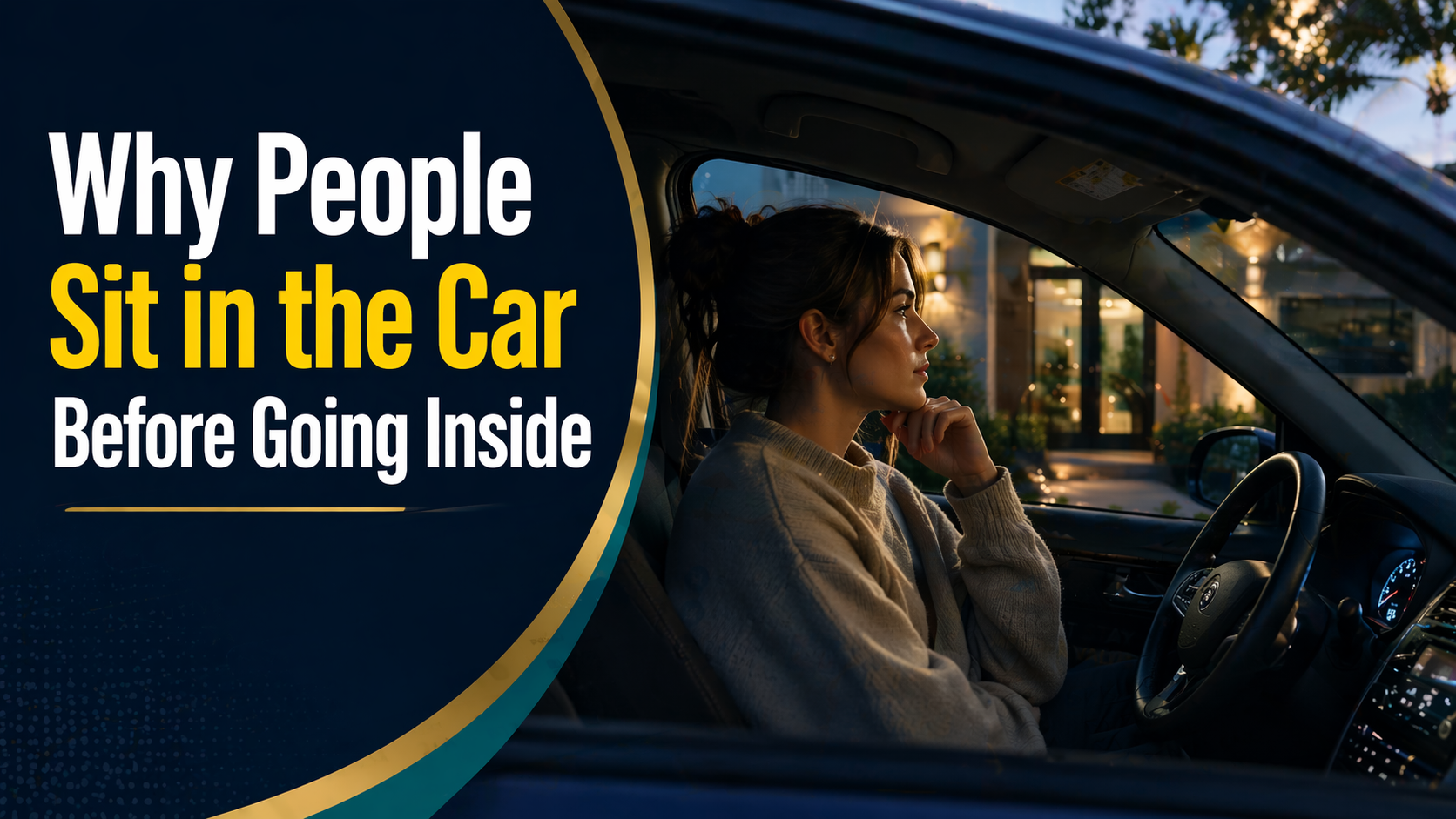
Why People Sit in the Car Before Going Inside
Beginner | April 23, 2026
✨ 혼자서 기사를 소리 내어 읽거나 튜터를 따라 각 단락을 반복해서 읽으세요. 레벨...
Why Sitting in the Car Feels So Familiar
A Small Pause Between One Part of the Day and the Next
Have you ever parked your car at home, at work, or at the gym and then just stayed there for a few minutes? A recent AP News article says many people do exactly that. Some scroll on their phones, some listen to music, and some simply sit in silence. According to AP, the habit has become so common that many people now talk about it online like a shared ritual. (AP News)
Psychologists Say It Can Be a Reset
The article explains that this pause can work like a buffer between one part of the day and the next. Clinical psychologist Jenny Taitz told AP that many people are moving “100 miles an hour,” so even a short stop can help them slow down and reset. Psychologist Anthony Vaccaro also told AP that a brief break can help people relax and prepare before moving forward. In other words, sitting in the car is not always laziness. Sometimes it is a simple mental reset. (AP News)
Why the Car Feels Like a Safe Place
It Is an In-Between Space You Can Control
One reason this habit makes sense is that the car feels like a private little world. AP reports that psychologist Thuy-vy Nguyen, founder of Solitude Lab at Durham University in England, described the car as an “in-between space.” Inside the car, people can control the temperature, the music, and the amount of silence. That can make it easier to calm down after stress or prepare for the next part of the day. (AP News)
A Short Break Can Help Mood and Focus
AP also says scientists have found that brief moments to decompress during or after the workday can improve mood, sharpen focus, and boost energy. That is one reason this quiet habit may feel helpful. For busy people, a few minutes in the car can be like pressing a reset button before walking into the house, the office, or the gym.
The Habit Can Help, but There Is a Catch
What You Do During the Pause Matters
The article also gives an important warning. Taitz told AP that if a person is sitting in the car while scrolling, spiraling, or thinking again and again about upsetting problems, then the car is not a reset. It becomes part of the stress. AP suggests better options like slowing your breathing, listening to a familiar song, or making a simple plan for how you want to show up next—calmer, more patient, or more focused. That is a much better deal for your mind.
A Small Habit with a Useful Lesson
So what is the bigger lesson here? Sometimes people need a moment before they switch roles. Worker becomes parent. Employee becomes friend. Busy professional becomes someone trying to breathe again. Sitting in the car before going inside may look strange from the outside, but psychologically, it can make real sense.
Vocabulary
- ritual (noun) – a habit or action done in a regular way.
Example: Sitting in the car became a small daily ritual for her. - buffer (noun) – something that gives space or protection between two things.
Example: The quiet pause acted as a buffer between work and home. - reset (noun) – a fresh start or return to a better state.
Example: A few quiet minutes in the car gave him a mental reset. - decompress (verb) – to relax after stress or pressure.
Example: She sat in the car for five minutes to decompress after work. - solitude (noun) – the state of being alone in a peaceful way.
Example: Some people need a little solitude before going inside. - spiral (verb) – to lose control mentally or emotionally.
Example: He started to spiral while thinking about the same problem again and again. - familiar (adjective) – well known and comforting.
Example: A familiar song helped her relax in the car. - patient (adjective) – calm and able to wait without anger.
Example: He wanted to feel more patient before walking into the house. - transition (noun) – a change from one state, role, or situation to another.
Example: The drive home created a transition between work and family life. - intentional (adjective) – done on purpose and with thought.
Example: Taking a short break can help you feel more intentional about what comes next.
Discussion Questions (About the Article)
- Why do many people sit in their cars before going inside?
- How do psychologists describe this kind of pause?
- Why does the car feel like a helpful place for some people?
- What are some healthy things to do during this short break?
- When can this habit become unhelpful instead of helpful?
Discussion Questions (About the Topic)
- Do you ever need a quiet moment before starting the next part of your day?
- What helps you reset after work or stress?
- Do you think short breaks improve focus and mood? Why?
- What is the difference between resting and avoiding something?
- Where is your favorite place to be alone for a few minutes?
Related Idiom
Catch Your Breath
Catch your breath means to pause and recover after stress or activity.
Example: Sitting in the car for a few minutes can help you catch your breath before going inside.
📢 Want more practical English through real news stories? Sign up for the All About English Mastery Newsletter here: allaboutenglishmastery.com/newsletter
Want to build stronger English in less time? Check out Mastering English for Busy Professionals.
Follow our YouTube channel @All_About_English for more English tips and practice.
This article was inspired by: AP News


 한국어
한국어  English