

Natural Hormone May Open a New Path for Weight Loss
Beginner | May 3, 2026
✨ 혼자서 기사를 소리 내어 읽거나 튜터를 따라 각 단락을 반복해서 읽으세요. 레벨...
Why This Natural Hormone Study Is Getting Attention
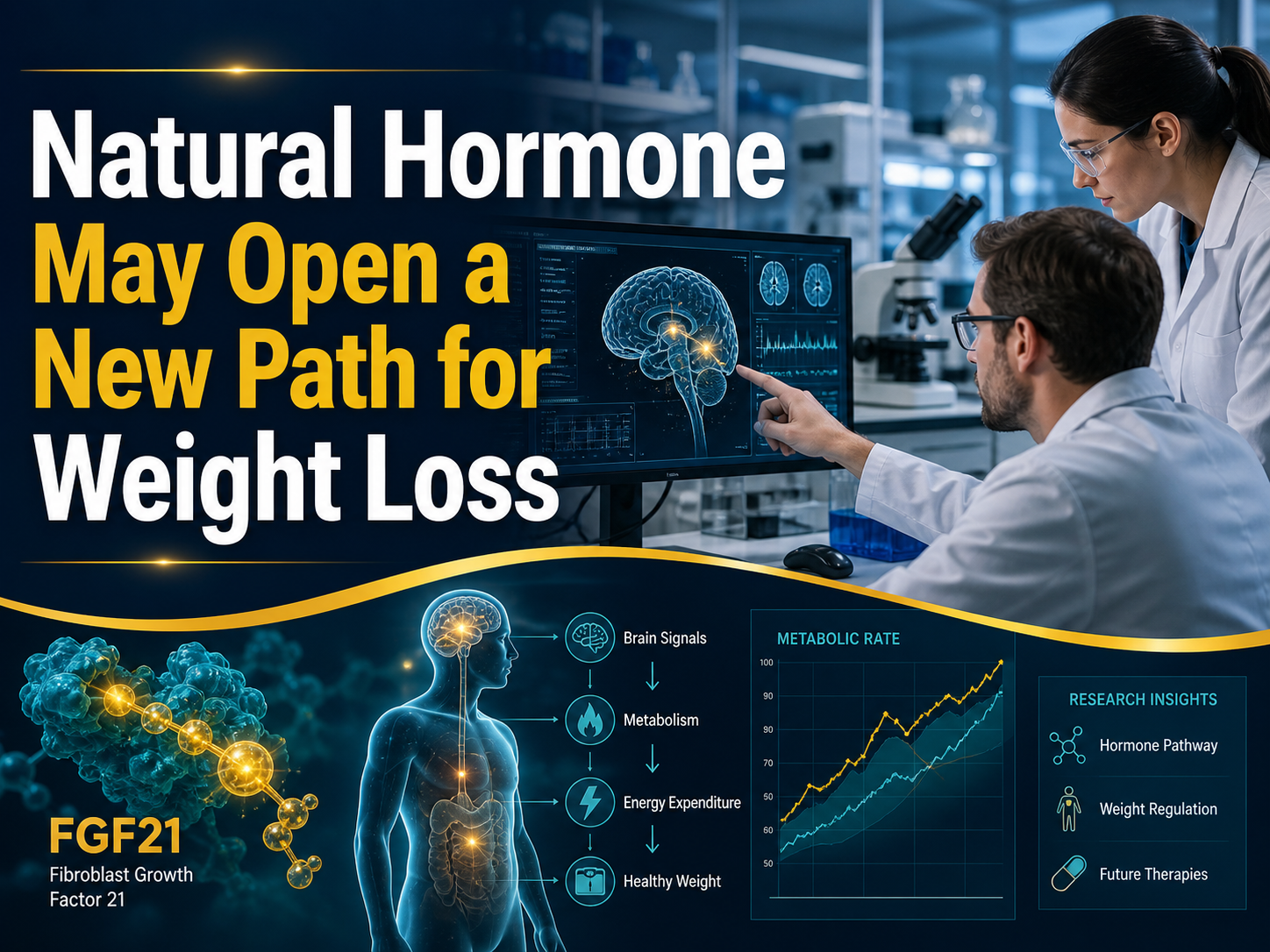
A natural hormone study from the University of Oklahoma is getting attention because it may point to a new way to fight obesity. Researchers studied a natural hormone called FGF21, which stands for fibroblast growth factor 21. According to Fox News, the study used mouse models and found that FGF21 appeared to reverse obesity by sending signals to a special part of the brain.
FGF21 Works Differently From GLP-1 Drugs
Many people now know about GLP-1 weight-loss drugs, such as drugs in the same general family as Ozempic and Wegovy. These drugs often help people eat less by reducing appetite. But FGF21 may work in a different way. Researchers said FGF21 targets a similar brain area, but instead of mainly lowering appetite, it appears to increase the body’s metabolic rate. In simple English, that means the body may burn more energy. (Fox News)
The Brain Area Surprised Scientists
The researchers expected FGF21 to send signals to the hypothalamus, a brain area often connected to body weight regulation. But Matthew Potthoff, PhD, from the University of Oklahoma College of Medicine, said the team was surprised. The hormone signaled to the hindbrain, the lower back region of the brain. That is interesting because GLP-1 analogs are also believed to act in this general area. In other words, two different tools may work near the same “control room,” but press different buttons. (University of Oklahoma Health Sciences)
What the Study Found in Mice
The study was published in Cell Reports on March 31, 2026. Its title was “Pharmacological administration of FGF21 reverses obesity through a parabrachial-projecting neuron population in the hindbrain.” Yes, that title sounds like it was built in a science factory with no windows. But the main idea is easier: in mice, FGF21 activated a brain circuit that helped reduce body weight. The study connected this effect to special hindbrain neurons that project to another brain area called the parabrachial nucleus. (Cell Reports, PubMed)
Why This Could Matter for Future Medicine
Scientists are interested in FGF21 because it may lead to more targeted treatments. Potthoff said identifying the exact brain circuit could help researchers create therapies that work well without negative side effects. Fox News also reported that FGF21 is already involved in drug development for MASH, which stands for metabolic dysfunction-associated steatohepatitis, a serious form of fatty liver disease. This means the research may connect weight loss, metabolism, and liver health. (Fox News, University of Oklahoma Health Sciences)
Experts Still Urge Caution
This is exciting research, but it is still early. Dr. Peter Balazs, a hormone and weight-loss specialist in New York and New Jersey, told Fox News that this was a preclinical mouse study. That means the results came from animal research, not from large human trials. He also warned that FGF21 may behave differently in humans than in mice. Some possible concerns include digestive problems, bone loss, and whether the body could become less responsive to FGF21 over time. (Fox News)
A New Direction, Not a Magic Fix
The natural hormone study does not mean people can ignore healthy habits. It also does not mean a new medicine is ready tomorrow. But it may give scientists another path to explore. Instead of only asking, “How can we make people eat less?” researchers can also ask, “How can the body use energy better?” That is an important business-casual lesson for health news: new ideas are exciting, but smart people still read the fine print. (ScienceDaily)
Vocabulary
- Hormone (noun) – a chemical messenger made by the body.
Example: “FGF21 is a natural hormone that may affect metabolism.” - Obesity (noun) – a health condition involving too much body fat.
Example: “The study looked at obesity in mouse models.” - Metabolism (noun) – how the body uses energy from food.
Example: “FGF21 may affect metabolism by increasing energy burning.” - Metabolic rate (noun) – the speed at which the body burns energy.
Example: “A higher metabolic rate means the body uses more energy.” - Appetite (noun) – the desire to eat food.
Example: “Some weight-loss drugs work by lowering appetite.” - Hindbrain (noun) – the lower back part of the brain.
Example: “Researchers found that FGF21 signaled to the hindbrain.” - Hypothalamus (noun) – a brain area involved in hunger, weight, and body regulation.
Example: “Scientists first expected FGF21 to signal to the hypothalamus.” - Preclinical (adjective) – tested before large studies in humans.
Example: “This was a preclinical mouse study.” - Therapy (noun) – a treatment for a health problem.
Example: “Researchers hope this discovery may lead to new therapies.” - Side effect (noun) – an unwanted result from a medicine or treatment.
Example: “Scientists want treatments that work without serious side effects.”
Discussion Questions (About the Article)
- What is the name of the natural hormone in the study?
- How may FGF21 work differently from GLP-1 drugs?
- Which brain area surprised the researchers?
- Why are scientists interested in FGF21 and MASH?
- Why do experts say people should be cautious about this study?
Discussion Questions (About the Topic)
- Why do you think weight-loss research gets so much public attention?
- Should people be careful when reading health headlines? Why?
- What healthy habits do you think matter most for long-term health?
- How should news articles explain early animal studies to the public?
- Would you trust a new treatment more if it worked on appetite or metabolism? Why?
Related Idiom
“Read the fine print” – to look carefully at the details before making a decision.
Example: “The natural hormone study sounds exciting, but readers should read the fine print because it was tested in mice, not in large human trials.”
📢 Want more practical English through real news stories? Sign up for the All About English Mastery Newsletter here: allaboutenglishmastery.com/newsletter
Want to build stronger English in less time? Check out Mastering English for Busy Professionals.
Follow our YouTube channel @All_About_English for more English tips and practice.
This article was inspired by: Fox News, University of Oklahoma Health Sciences, Cell Reports, PubMed, and ScienceDaily


 한국어
한국어  English