

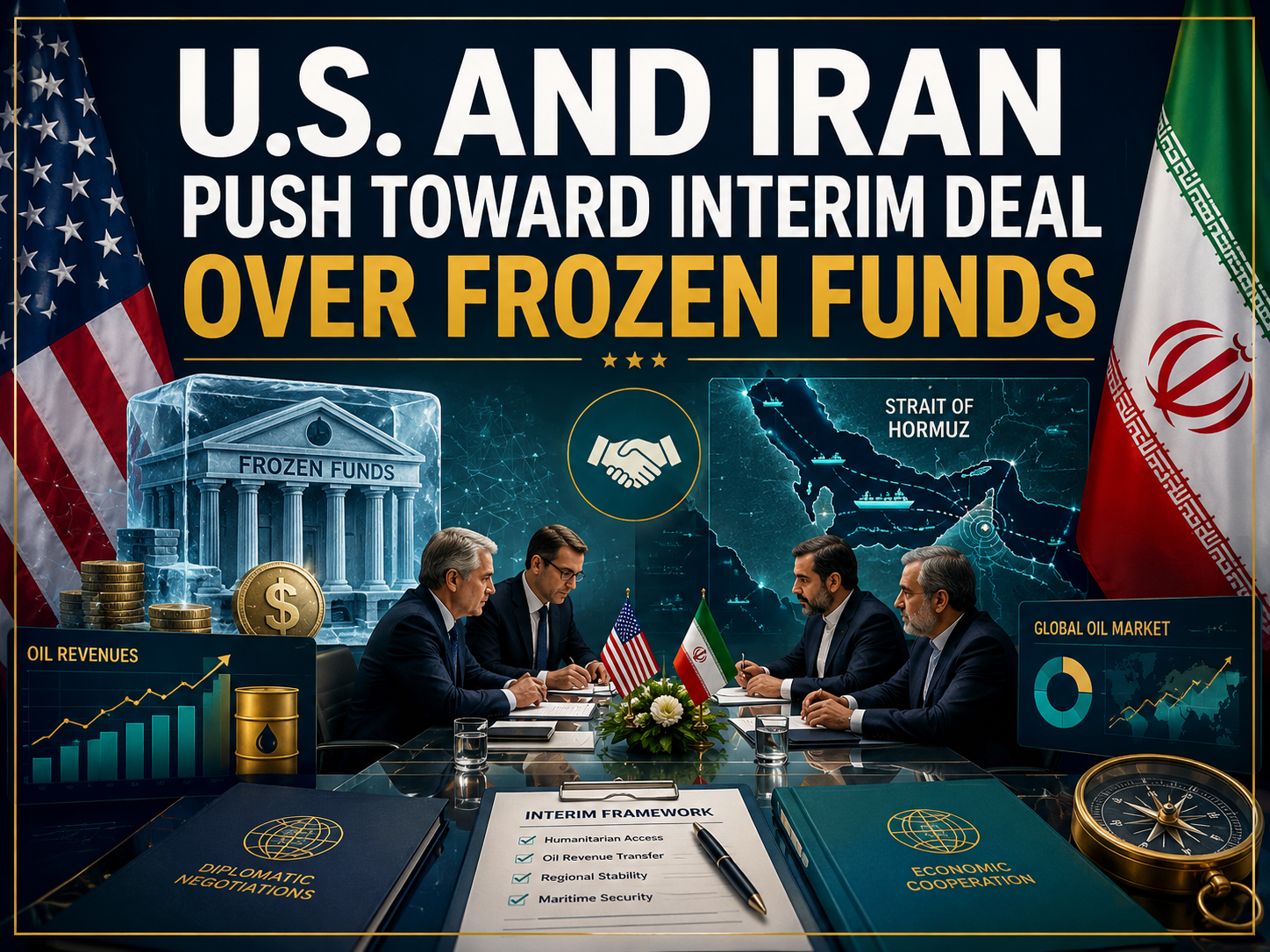
U.S. and Iran Push Toward Interim Deal Over Frozen Funds
Advanced | June 17, 2026
✨ 혼자서 기사를 소리 내어 읽거나 튜터를 따라 각 단락을 반복해서 읽으세요. 레벨...
A Possible Breakthrough: U.S. and Iran Push Toward Interim Deal
The United States and Iran may be moving closer to an interim deal after months of conflict, pressure, and economic damage. According to Reuters, Iranian and Western sources said both sides were still exchanging messages about a possible memorandum of understanding. The biggest issue on the table was money: Iran wanted access to billions of dollars in frozen oil revenues held in foreign banks.
Why the U.S.-Iran Frozen Funds Deal Matters
The U.S.-Iran frozen funds deal is not just about money sitting in a bank account. For Iran, the frozen funds could provide breathing room for an economy under heavy pressure. Reuters reported that Iran wanted $6 billion to $12 billion released directly to Tehran. Another Iranian official said talks included a possible timetable for releasing the remaining $12 billion within 60 days. Washington, however, wanted a more controlled approach, with money released in stages and used for humanitarian goods instead of simply returned to Iran.
What the Interim Deal Could Include
The possible agreement would focus on practical steps first, not every difficult issue at once. According to Reuters’ June 11 report, the framework could include a temporary easing of Iran’s control over the Strait of Hormuz, phased access through the waterway, and an end to the U.S. blockade on Iranian ports. That matters because the Strait of Hormuz is one of the world’s most important energy shipping routes. When that waterway becomes unstable, oil markets, shipping companies, and governments all start watching very closely.
What Is Still Unresolved?
This deal would not solve everything. Major questions about Iran’s nuclear enrichment capacity and its stockpile of highly enriched uranium would be left for future talks. Earlier Reuters reporting said Iran had already been studying a limited agreement that could stop the fighting without requiring major nuclear concessions right away. In business terms, this is like agreeing on the urgent items first and saving the hardest contract details for later. That can be useful, but it also leaves room for disagreement. One Iranian source told Reuters that the recent military confrontation may have reached a “dead end,” but also warned that the situation could still return to full-scale war.
Why Both Sides May Want a Deal
Both Washington and Tehran have reasons to keep talking. Iran faces economic pressure and a population tired of uncertainty. The U.S. wants to reduce pressure on global energy markets while avoiding a deal that looks weaker than the 2015 Obama-era nuclear agreement, which Donald Trump strongly criticized. Reuters noted that Trump had repeatedly said a deal was close while also threatening more strikes if Tehran did not agree quickly. In other words, both sides were negotiating with one hand extended and the other hand still holding a stick. Diplomacy: never boring, rarely tidy.
What Happened After the Talks?
A few days later, Reuters reported that U.S. and Iranian officials announced a framework to end the war, halt the U.S. blockade of Iran, and reopen the Strait of Hormuz. Global leaders welcomed the announcement but remained cautious. European leaders stressed that Iran must not acquire a nuclear weapon, while several countries called for free and safe navigation through the Strait of Hormuz. So, the U.S.-Iran frozen funds deal may become one part of a larger effort to reduce tensions in the Middle East.
Vocabulary
- Interim (adjective) – temporary or used until something final is ready.
Example: “The two sides discussed an interim agreement before a final peace deal.” - Frozen funds (noun phrase) – money that cannot be used because it is blocked by legal or political action.
Example: “Iran wants access to frozen funds held in foreign banks.” - Memorandum of understanding (noun phrase) – a formal document showing that two sides agree on basic points.
Example: “Officials exchanged messages about a memorandum of understanding.” - Humanitarian goods (noun phrase) – products meant to help people, such as food, medicine, or basic supplies.
Example: “Washington wanted the money used for humanitarian goods.” - Blockade (noun) – an action that prevents ships, goods, or people from entering or leaving a place.
Example: “The interim deal could end the U.S. blockade on Iranian ports.” - Stalemate (noun) – a situation where neither side can win or make progress.
Example: “The conflict appeared to reach a military stalemate.” - Liquidity (noun) – available money or cash that can be used quickly.
Example: “Officials discussed the level of liquidity available to Iran.” - Phased (adjective) – done in steps over time.
Example: “The U.S. preferred a phased release of the money.” - Enrichment (noun) – the process of increasing the level of a substance, often used when discussing nuclear material.
Example: “Iran’s nuclear enrichment capacity remains a major issue.” - Confrontation (noun) – a serious conflict or disagreement.
Example: “The confrontation between the U.S. and Iran raised global concerns.”
Discussion Questions About the Article
- What was the main financial issue in the U.S.-Iran talks?
- Why did Iran want access to frozen oil revenues?
- How did the U.S. want the money to be released?
- What role does the Strait of Hormuz play in this story?
- Why were nuclear issues left for future talks?
Discussion Questions About the Topic
- Should frozen funds be used as a tool in international negotiations? Why or why not?
- Is it better to make an interim deal first or wait for a complete final agreement?
- How can economic pressure affect a country’s foreign policy decisions?
- Why do shipping routes like the Strait of Hormuz matter to the global economy?
- What risks come with negotiating while military conflict is still happening?
Related Idiom
“Kick the can down the road” – to delay dealing with a difficult problem until later.
Example: “The interim deal may reduce tensions now, but leaving nuclear questions for future talks could be seen as kicking the can down the road.”
📢 Want more practical English through real news stories? Sign up for the All About English Mastery Newsletter here: allaboutenglishmastery.com/newsletter
Want to build stronger English in less time? Check out Mastering English for Busy Professionals.
Follow our YouTube channel @All_About_English for more English tips and practice.
This article was inspired by: Reuters – U.S. and Iran haggle over frozen funds, Reuters – Iran studying deal to halt war, and Reuters – Global leaders react to U.S.-Iran peace agreement


 한국어
한국어  English