

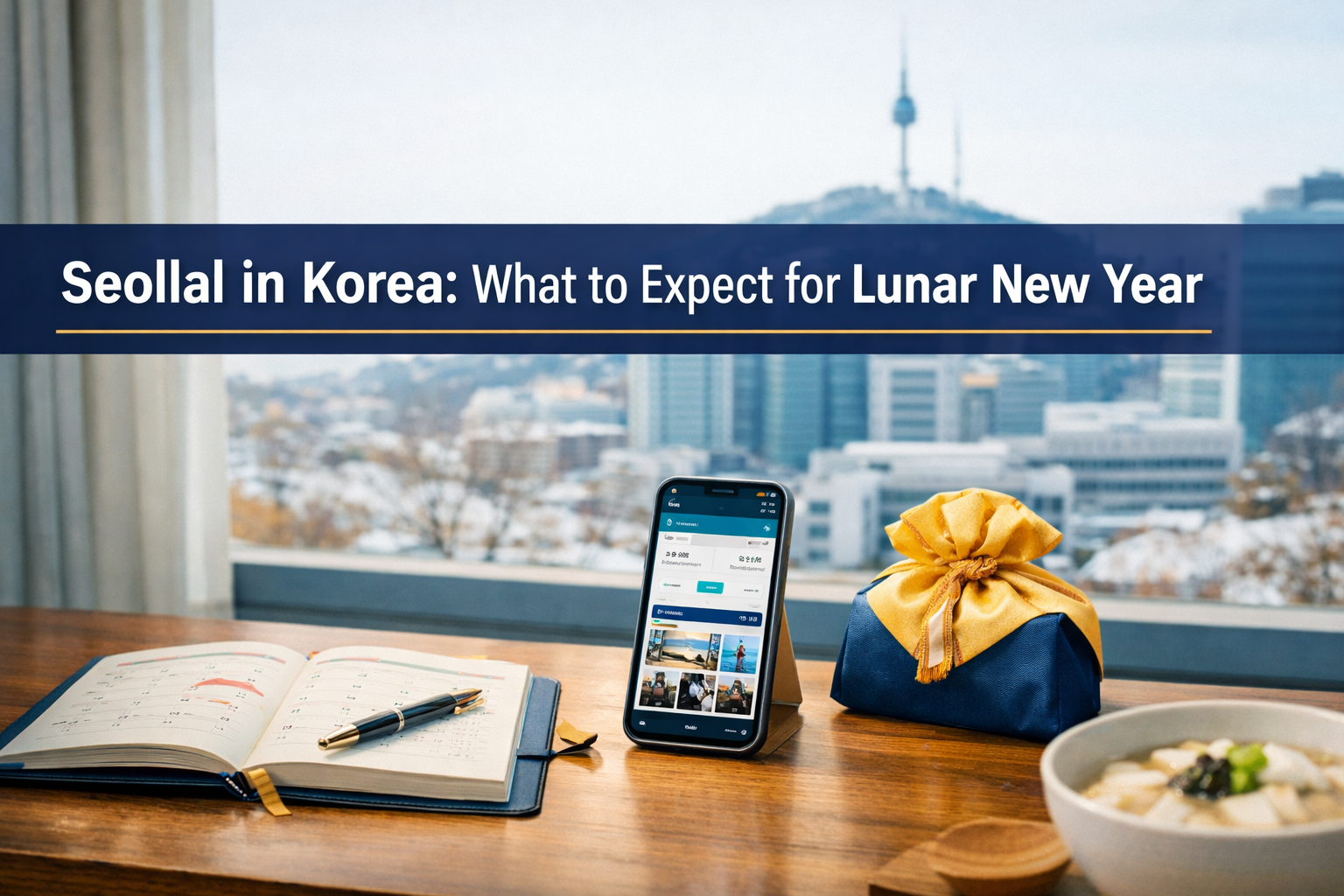
Seollal in Korea: What to Expect for Lunar New Year
Beginner | February 13, 2026
✨ Read the article aloud on your own or repeat each paragraph after your tutor.
Seollal in Korea: A Quick Guide to Lunar New Year
If you live in Korea, you’ve probably heard people say “Seollal” (설날). This Seollal in Korea guide will help you understand what to expect. It’s Korea’s Lunar New Year, and it’s a huge family holiday—kind of like the “Christmas + New Year” season back home, but with very Korean traditions. In 2026, Seollal falls on February 17, and the official holiday period runs February 16–18. (Stripes Korea)
Family Time, Traditions, and a Lot of Food
During Seollal in Korea, many families travel to spend time together, share meals, and wish each other good luck for the year ahead. Some families do ancestral rites (a formal tradition to honor ancestors), while many others keep things simpler and focus on rest or travel. The article also points out something practical: big traditional celebrations can involve hours of cooking and preparation, and that work has often fallen on women in the family. (Stripes Korea)
What’s Open, What’s Closed
Because Seollal includes national holidays, most public offices close during the three-day period. But private businesses vary. Small family-run restaurants and some traditional markets may close for one day or all three days. On the other hand, many convenience stores and grocery stores stay open, and travel-related places may stay open (sometimes with longer hours) because families often go out during the break. (Stripes Korea)
Travel Warning: This Is Peak Season
If you plan to travel, treat Seollal like a “sell-out season.” Roads can get heavily congested as people drive to hometowns or leave for family trips. Train and bus tickets can disappear fast, so travelers are advised to book several weeks in advance. Prices can rise for flights to places like Jeju Island and Japan, too. The busiest traffic often hits the day before Seollal and from morning to early evening on Seollal Day. (Stripes Korea)
A Nice Bonus: Free Tolls and Free Admission
Here’s the good news: the government often makes Seollal a little easier on your wallet. During the holiday period, expressway tolls are waived across Korea. Also, many museums and historic sites offer free admission and may run special Seollal programs. So if you want a “family outing day,” this is a smart time to do it. (Stripes Korea)
Cultural Cues: Greetings, Tteokguk, and Bowing
One common greeting is “Saehae bok mani badeuseyo” (새해 복 많이 받으세요), meaning “Wishing you lots of luck in the New Year.” You can say it to friends, coworkers, neighbors—pretty much anyone. Food-wise, many people eat tteokguk (rice cake soup). The article explains that the white rice cakes symbolize renewal and good fortune, and there’s a common saying that eating tteokguk means you’ve become one year older. Another tradition is sebae, a deep bow to elders. Elders often respond with blessings and sebaetdon (New Year cash gifts). A detail that surprises many foreigners: one deep bow is used for greeting living elders, while two deep bows are for honoring the deceased. Visitors aren’t expected to do the ritual, but it helps to understand the meaning. (Stripes Korea)
Vocabulary
- Holiday period (noun) – a set time when many people are off work.
Example: “The holiday period for Seollal runs from Feb. 16–18.” - Ancestral rites (noun) – traditional ceremonies to honor ancestors.
Example: “Some families still perform ancestral rites during Seollal.” - Public office (noun) – a government workplace or service center.
Example: “Most public offices close during the national holiday.” - Vendor (noun) – a person who sells goods, often in a market.
Example: “Some market vendors close their shops for Seollal.” - Congested (adjective) – crowded and slow because of too many cars/people.
Example: “The highways are congested before Seollal.” - Book in advance (verb phrase) – reserve early.
Example: “You should book in advance if you want train tickets.” - Waived (adjective/verb) – removed or not charged.
Example: “Expressway tolls are waived during the holiday.” - Admission (noun) – permission to enter, often with a ticket.
Example: “Some museums offer free admission on Seollal.” - Blessing (noun) – a kind wish for someone’s future.
Example: “Elders give blessings after a sebae bow.” - Gesture (noun) – a movement that shows meaning or emotion.
Example: “A deep bow is a respectful gesture in Korea.”
Discussion Questions (About the Article)
- When is Seollal in 2026, and how long is the holiday period?
- What types of places might close during Seollal? What places often stay open?
- Why is Seollal considered a “peak travel season” in Korea?
- What free or discounted benefits might you get during Seollal?
- Which Seollal tradition surprised you most (greeting, tteokguk, or bowing)? Why?
Discussion Questions (About the Topic)
- What is the biggest holiday in your country, and what do people usually do?
- Do you think family traditions should change over time? Why or why not?
- If you were hosting a foreign friend during Seollal, what would you show them?
- What are the pros and cons of traveling during a major holiday?
- What’s one polite greeting you use in your culture for a new year or special holiday?
Related Idiom
“Plan ahead” – decide early so you don’t face problems later.
Example: “If you want to travel during Seollal, plan ahead and book your tickets early.”
📢 Want more English practice like this? 👉 Sign up for the All About English Mastery Newsletter! Click here to join us!
Want to finally Master English but don’t have the time? Mastering English for Busy Professionals is the course for you! Check it out now!
Follow our YouTube Channel @All_About_English for more great insights and tips.
This article was inspired by: Stars and Stripes – Stripes Korea

 English
  한국어
한국어