

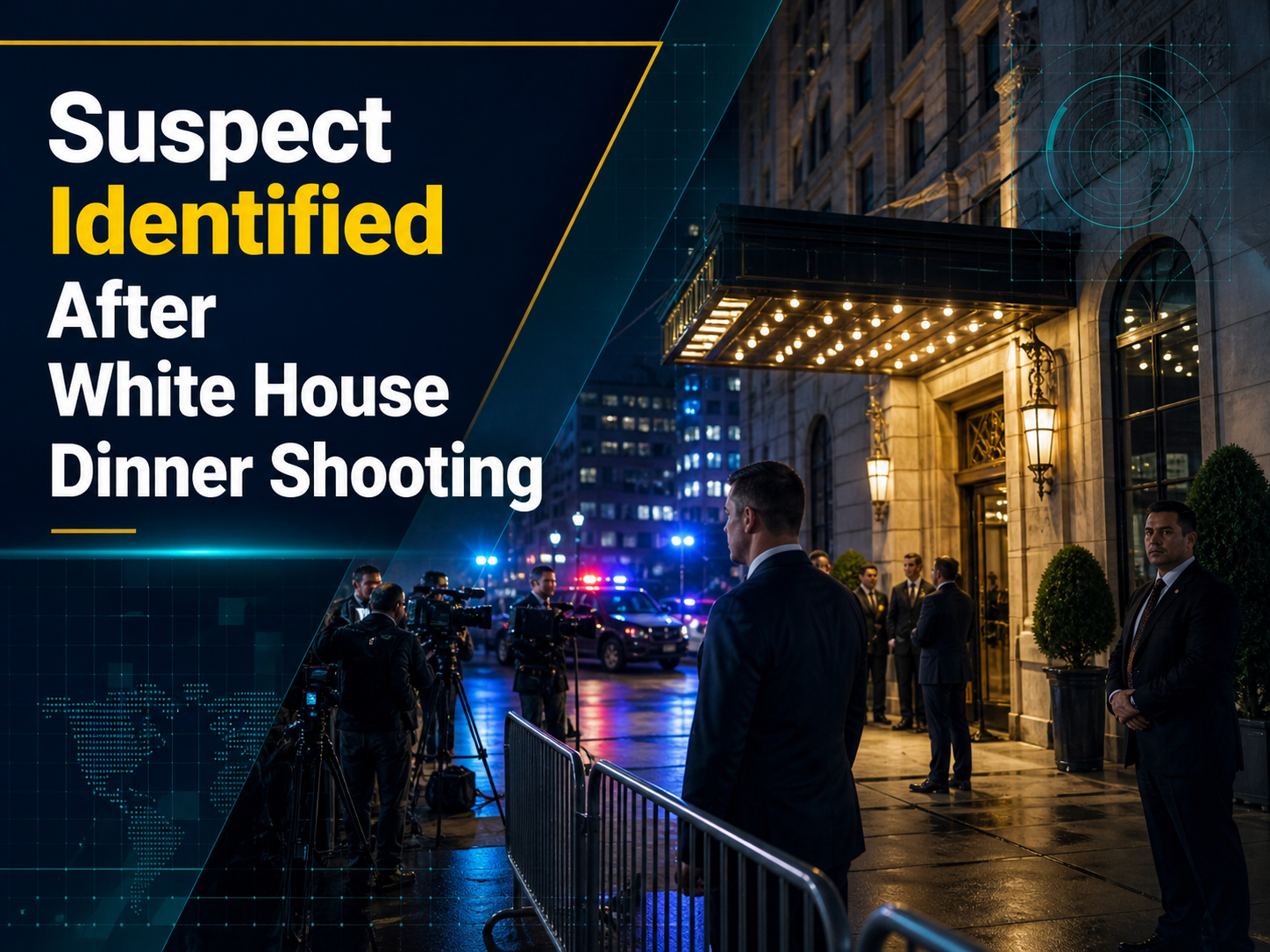
Suspect Identified After White House Dinner Shooting
Advanced | May 1, 2026
✨ Read the article aloud on your own or repeat each paragraph after your tutor.
A High-Profile Dinner Turns Into a Security Crisis
On April 25, 2026, a serious security incident interrupted the White House Correspondents’ Association Dinner at the Washington Hilton in Washington, D.C. Authorities identified the suspect as Cole Tomas Allen, a 31-year-old man from Torrance, California. Federal officials say Allen tried to storm the dinner area while carrying weapons, as President Donald Trump, First Lady Melania Trump, senior administration officials, journalists, and other guests attended the event. (AP News)
Why the White House Dinner Shooting Story Matters
The White House dinner shooting story matters because it involved more than crime. It also tested security planning, public trust, and crisis response. People expect major public events to feel controlled, professional, and safe. But this incident showed how quickly one person can create danger near powerful public figures. It also raised hard questions about how leaders can keep public life open when political violence becomes a growing concern. (Reuters)
What Officials Say Happened
According to AP News, federal prosecutors released video showing Allen running through a security checkpoint with a long gun near the ballroom. Prosecutors said he carried guns and knives and tried to reach the dinner area. A bullet struck a Secret Service officer’s bullet-resistant vest, and the officer returned fire. Prosecutors said they found no evidence that friendly fire hit the officer. Allen suffered injuries, but gunfire did not hit him, and officers took him into custody. (AP News)
New Video and New Details
Prosecutors released video that reportedly shows Allen walking through parts of the hotel the day before the attack. Court papers said he took a photo of himself in his hotel room shortly before the incident while wearing or carrying items such as an ammunition bag, a shoulder holster, and a knife. CBS News also reported that Allen checked into the hotel the day before the dinner and traveled by train from Los Angeles to Chicago, then from Chicago to Washington, D.C. (CBS News)
The Charges Against the Suspect
The Department of Justice said prosecutors charged Allen with attempting to assassinate the president of the United States, using a firearm during a crime of violence, and transporting a firearm across state lines with intent to commit a felony. FBI Director Kash Patel said investigators believed Allen traveled to Washington, D.C., to target President Trump and members of the Trump administration. At the same time, careful legal language matters: Allen faces accusations, not a conviction. The case still has to move through court. (Department of Justice)
The Friendly Fire Question
After the incident, some reports questioned whether friendly fire may have hit the injured Secret Service officer. However, Reuters reported that President Trump and Secret Service Director Sean Curran both said friendly fire did not hit the officer. Curran said the suspect shot the agent at close range and that the agent fired five times in response. He also defended the security setup and said security teams stopped the attack within seconds at the outer edge of a multi-layered security area. (Reuters)
The Bigger Lesson: Security, Communication, and Trust
For professionals, this story offers a useful example of risk management and crisis communication. When something goes wrong at a major event, leaders must move quickly, explain clearly, and avoid confusing the public. That sounds simple, but video, rumors, and social media can turn a crisis into a communication mess in minutes. In business terms, the people in charge had to keep the ball rolling while they managed fear, uncertainty, and public attention.
The White House dinner shooting story is serious, but it also gives English learners a chance to practice advanced language about law, security, evidence, public events, and communication under pressure. These topics help professionals speak more clearly in business meetings, presentations, and difficult discussions.
Vocabulary
- Suspect (noun) – a person who officials believe may have committed a crime.
Example: “Authorities identified the suspect after the shooting incident.” - Security checkpoint (noun) – a place where security staff check people before they enter a protected area.
Example: “The suspect allegedly ran through a security checkpoint.” - Armed (adjective) – carrying a weapon.
Example: “Officials said the suspect carried guns and knives.” - Storm (verb) – to rush into a place forcefully or aggressively.
Example: “Prosecutors said the suspect tried to storm the dinner area.” - Bullet-resistant vest (noun) – protective clothing that reduces the chance of injury from bullets.
Example: “A bullet struck the officer’s bullet-resistant vest.” - Friendly fire (noun) – accidental injury caused by someone on the same side.
Example: “Officials said friendly fire did not hit the officer.” - Charge (noun) – an official accusation of a crime.
Example: “Allen faces several federal charges.” - Convicted (adjective) – found guilty in a court of law.
Example: “A court must prove guilt before it convicts a suspect.” - Risk management (noun) – the process of planning for and reducing possible dangers.
Example: “Large public events require careful risk management.” - Crisis communication (noun) – clear communication during an emergency or serious problem.
Example: “Good crisis communication helps protect public trust.”
Discussion Questions (About the Article)
- Who did authorities identify as the suspect in the White House dinner shooting story?
- Where did the incident happen, and why was the location important?
- What weapons did officials say the suspect carried?
- What did Reuters report about the friendly fire question?
- Why should reporters say “accused” instead of “guilty” before a trial?
Discussion Questions (About the Topic)
- How should security teams prepare for major public events?
- Should political leaders attend open public events during dangerous times? Why or why not?
- How can news organizations report serious crime stories responsibly?
- How should leaders balance public access with personal safety?
- How can leaders communicate clearly after a crisis?
Related Idiom
“A wake-up call” – an event that warns people to pay attention to a serious problem.
Example: “The White House dinner shooting gave security teams planning high-profile events a wake-up call.”
📢 Want more practical English through real news stories? Sign up for the All About English Mastery Newsletter here: allaboutenglishmastery.com/newsletter
Want to build stronger English in less time? Check out Mastering English for Busy Professionals.
Follow our YouTube channel @All_About_English for more English tips and practice.
This article took inspiration from: Fox News, AP News, Reuters, CBS News, and the Department of Justice


 English
  한국어
한국어