

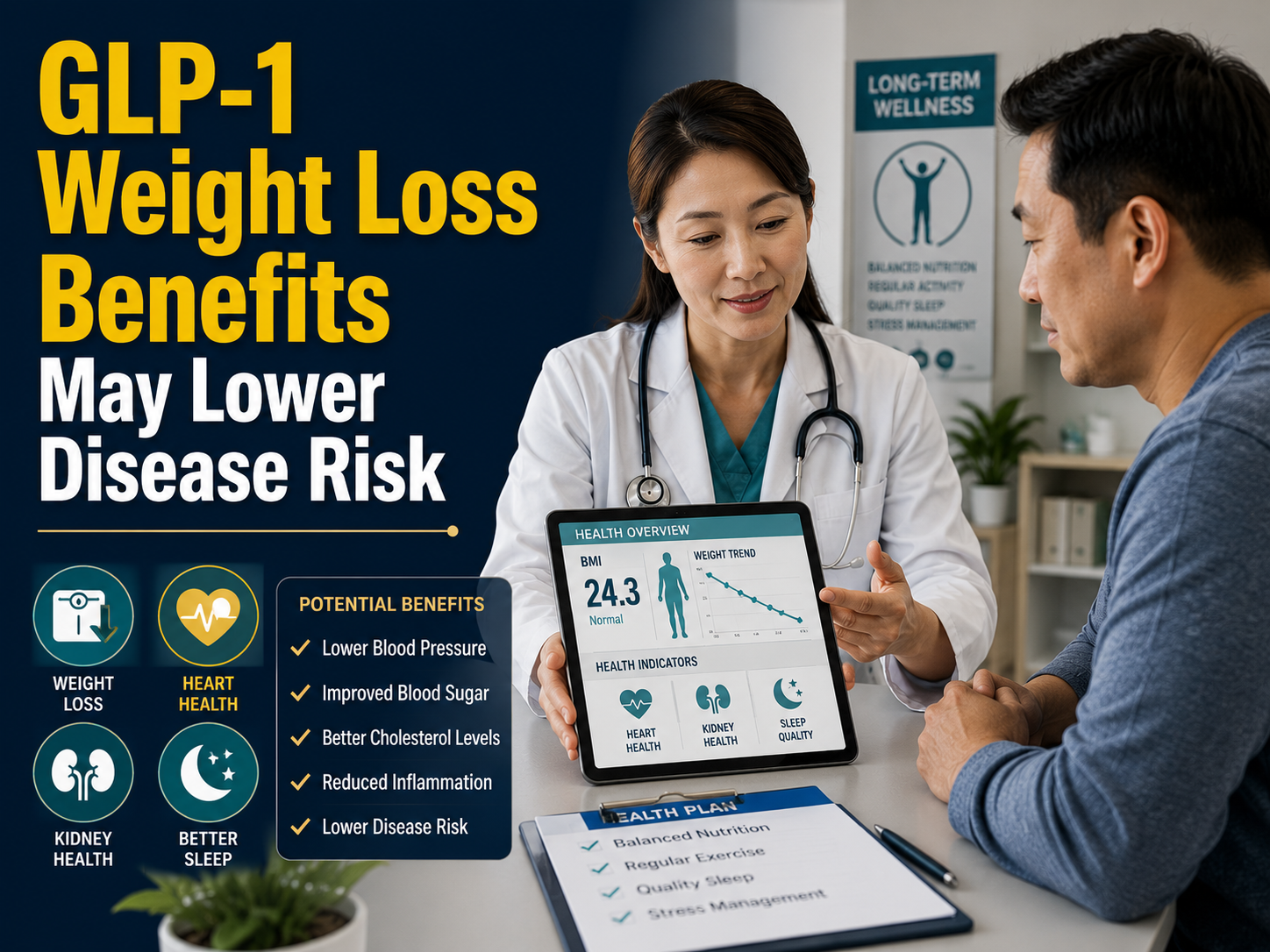
GLP-1 Weight Loss Benefits May Lower Disease Risk
Beginner | June 5, 2026
✨ Read the article aloud on your own or repeat each paragraph after your tutor.
GLP-1 Weight Loss Benefits May Lower Disease Risk
Many people know GLP-1 drugs because of weight loss. These medicines include well-known names like Ozempic, Wegovy, Mounjaro, and Saxenda. They are often used to help with type 2 diabetes or obesity.
On May 28, 2026, Yahoo Health reported that people who lost more weight while taking GLP-1 drugs had a lower risk of some diseases linked to obesity. These included health problems like sleep apnea and kidney disease.
Why GLP-1 Weight Loss Benefits Matter
The study looked at real-world health data, not only a small lab test. According to ScienceDaily, researchers studied 89,718 patients who started GLP-1-based treatments between January 2021 and June 2024. The study was led by Professor John Wilding from the University of Liverpool.
The researchers wanted to know what happened after people started these medications. Did losing more weight connect with better health? The answer seemed to be yes. People who lost more weight had lower risks of some serious obesity-related health problems. That is a pretty important “bonus feature,” and not the kind you find hidden in a software update.
What the Study Found
The researchers looked at several health problems: osteoarthritis, chronic kidney disease, obstructive sleep apnea, and heart failure. These conditions can be connected to obesity because extra body weight can put stress on the joints, heart, breathing, and kidneys.
According to News Medical, people who reduced their BMI by at least 15% had much lower risks compared with people who lost less than 5% of their BMI. Their risk of osteoarthritis was 37% lower, their risk of chronic kidney disease was 30% lower, their risk of obstructive sleep apnea was 69% lower, and their risk of heart failure was 32% lower, although that heart failure result was not statistically significant.
Weight Gain Was Linked to Higher Risk
The study also found that some people gained weight after starting treatment. That may sound surprising, but real life is messy. People stop medications, miss doses, change habits, or have other health issues. Medicine is not magic. If it were, doctors would wear wizard hats, and honestly, hospitals would be more entertaining.
The researchers found that people who gained weight had higher risks for some health problems. Compared with people who lost a little weight, those who gained weight had a 22% higher risk of obstructive sleep apnea and a 69% higher risk of heart failure. This suggests that keeping weight off may be very important for long-term health.
A Helpful Reminder About Health Choices
This story does not mean everyone should take GLP-1 drugs. These medicines can have side effects, and they should be used with medical advice. A doctor can help decide whether a medication is safe and useful for each person.
The bigger lesson is simple: weight loss can be connected to better health, especially for people with obesity-related risks. The study also shows that long-term habits still matter. Medicine may help, but healthy routines, regular checkups, and realistic goals are still part of the picture. In other words, the pill or injection may help open the door, but you still have to walk through it.
Vocabulary
- Medication (noun) – medicine used to treat a health problem.
Example: “Some people use GLP-1 medication for diabetes or weight loss.” - Obesity (noun) – a medical condition involving too much body fat.
Example: “Obesity can increase the risk of some diseases.” - Risk (noun) – the chance that something bad may happen.
Example: “The study looked at the risk of kidney disease.” - Condition (noun) – a health problem or illness.
Example: “Sleep apnea is a serious health condition.” - Kidney disease (noun) – a disease that affects how the kidneys work.
Example: “The study found a lower risk of kidney disease.” - Sleep apnea (noun) – a condition where breathing stops and starts during sleep.
Example: “Obstructive sleep apnea can make people feel tired during the day.” - BMI (noun) – a number that compares a person’s weight and height.
Example: “Researchers measured changes in BMI during the first year.” - Treatment (noun) – medical care or medicine used to help a patient.
Example: “The patients started GLP-1-based treatment.” - Significant (adjective) – large enough or important enough to notice.
Example: “Some patients had significant weight loss.” - Side effect (noun) – an unwanted result from medicine.
Example: “Some medications can cause side effects.”
Discussion Questions (About the Article)
- What kind of drugs did the article discuss?
- What diseases were linked to obesity in the study?
- How many patients were included in the study?
- What happened to people who lost at least 15% of their BMI?
- Why should people talk to a doctor before using GLP-1 drugs?
Discussion Questions (About the Topic)
- Why do many people find long-term weight loss difficult?
- What healthy habits can support weight loss?
- Should medicine be part of weight-loss treatment? Why or why not?
- How can people set realistic health goals?
- Why is it important to understand both benefits and side effects?
Related Idiom
“A step in the right direction” – an action that helps move toward a better result.
Example: “For some patients, losing weight with medical help may be a step in the right direction for better long-term health.”
📢 Want more practical English through real news stories? Sign up for the All About English Mastery Newsletter here: allaboutenglishmastery.com/newsletter
Want to build stronger English in less time? Check out Mastering English for Busy Professionals.
Follow our YouTube channel @All_About_English for more English tips and practice.
This article was inspired by: Yahoo Health, ScienceDaily, and News Medical.


 English
  한국어
한국어