

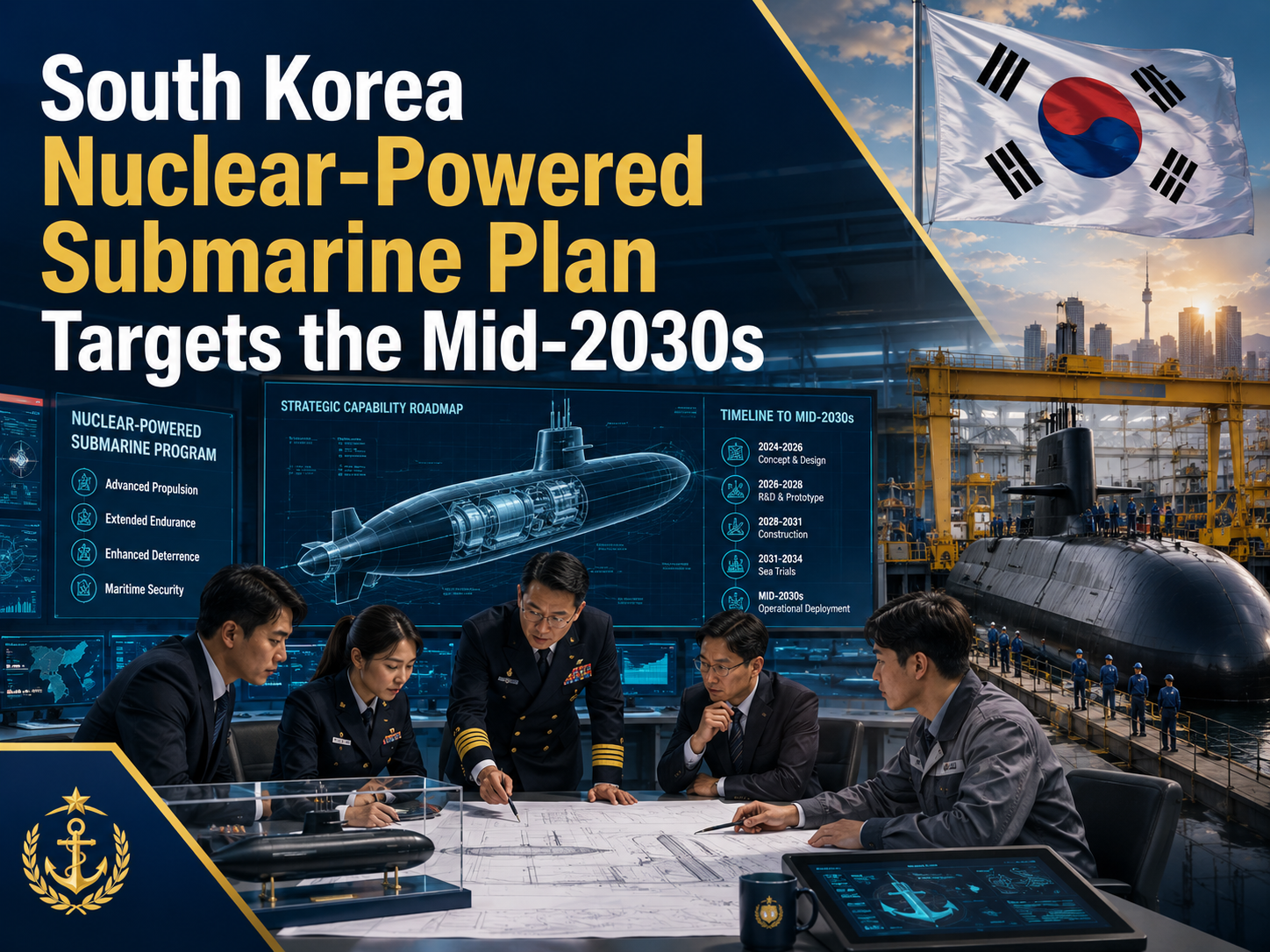
South Korea Nuclear-Powered Submarine Plan Targets the Mid-2030s
Intermediate | June 8, 2026
✨ 혼자서 기사를 소리 내어 읽거나 튜터를 따라 각 단락을 반복해서 읽으세요. 레벨...
A Big Step for South Korea’s Navy
South Korea says it wants to launch its first nuclear-powered submarine by the mid-2030s. According to Reuters, the plan is part of a new defense program aimed at countering North Korea’s submarine-launched nuclear and missile threats. Defense Minister Ahn Gyu-back said the submarine would use low-enriched uranium fuel and be developed and built in South Korea. (Reuters)
Why the South Korea Nuclear-Powered Submarine Plan Matters
The South Korea nuclear-powered submarine plan matters because it could change the balance of power under the sea. Nuclear-powered submarines can stay underwater much longer than regular diesel-powered submarines. They can also move farther and faster without needing to surface as often. In simple business English, this gives South Korea more “operational flexibility” — basically, more room to move and respond. (Reuters)
The Project: Jang Bogo N
Yonhap reported that the program is called “Jang Bogo N.” The name connects to South Korea’s long-running submarine development efforts, but the “N” has a modern meaning. According to the defense ministry, it stands for next-generation, nuclear-powered, and neo-technology. The goal is to launch the first vessel in the mid-2030s and bring it into operational service in the late 2030s or later. (Yonhap News Agency)
Nuclear-Powered Does Not Mean Nuclear-Armed
This is an important point for English learners: nuclear-powered does not mean nuclear-armed. A nuclear-powered submarine uses a small nuclear reactor for energy. That allows it to stay underwater for a long time. But South Korean officials say the submarine will not carry nuclear weapons. Defense Minister Ahn said South Korea remains committed to its international non-proliferation obligations and will cooperate with the International Atomic Energy Agency, the U.N. nuclear watchdog. (Yonhap News Agency)
Working with the United States
This project also depends on cooperation with the United States. Reuters reported that South Korea and the U.S. held formal talks in June about nuclear cooperation, including uranium enrichment, spent-fuel reprocessing, and nuclear-powered submarines. A South Korean Foreign Ministry spokesperson said nuclear-powered submarines would require a separate agreement because they involve the military use of nuclear energy. Translation: this is not just a shipbuilding project. It is also a legal, diplomatic, and strategic project. (Reuters)
Industry and Security Impact
The plan could also be good news for South Korea’s shipbuilding and defense industries. Reuters reported that shares of Hanwha Ocean and HD Hyundai Heavy rose after President Lee Jae Myung highlighted the importance of the project. Hanwha Ocean closed up 10.2 percent, while HD Hyundai Heavy closed up 9.6 percent. That shows investors see this as more than a military story. It could also mean major business opportunities for South Korea’s shipbuilders. (Reuters)
The Bigger Picture
For South Korea, the submarine plan is about security, technology, and national strategy. North Korea continues to build missile and nuclear capabilities, so Seoul wants stronger tools to monitor and respond to threats. At the same time, South Korea must carefully manage its alliance with the United States and its promises under global non-proliferation rules. The South Korea nuclear-powered submarine plan is ambitious, but it also comes with plenty of moving parts. In other words: impressive idea, complicated paperwork — the classic government combo meal.
Vocabulary
- Nuclear-powered (adjective) – using nuclear energy for power.
Example: “A nuclear-powered submarine can stay underwater for a long time.” - Submarine (noun) – a military or research vessel that travels underwater.
Example: “South Korea wants to launch its first nuclear-powered submarine by the mid-2030s.” - Launch (verb) – to officially start or send something into use.
Example: “The first vessel could launch in the mid-2030s.” - Low-enriched uranium (noun) – uranium with a lower level of the isotope used for nuclear fuel.
Example: “The submarine is expected to use low-enriched uranium fuel.” - Non-proliferation (noun) – efforts to stop the spread of nuclear weapons.
Example: “South Korea says it will follow non-proliferation rules.” - Operational service (noun) – the time when military equipment is ready for real use.
Example: “The submarine could enter operational service in the late 2030s or later.” - Propulsion (noun) – the system that moves a vehicle or vessel forward.
Example: “Nuclear propulsion gives submarines greater underwater endurance.” - Alliance (noun) – a close partnership between countries, often for defense.
Example: “The project depends partly on the South Korea-U.S. alliance.” - Defense industry (noun) – companies that build military equipment and technology.
Example: “The defense industry could benefit from the submarine project.” - Strategic (adjective) – connected to long-term planning and important goals.
Example: “The submarine is part of South Korea’s strategic defense plan.”
Discussion Questions (About the Article)
- When does South Korea hope to launch its first nuclear-powered submarine?
- What is the main reason South Korea wants this type of submarine?
- What does “Jang Bogo N” mean?
- Why is it important to understand the difference between nuclear-powered and nuclear-armed?
- How could this project affect South Korea’s shipbuilding industry?
Discussion Questions (About the Topic)
- Why do countries invest in advanced military technology?
- How can a country balance national security with non-proliferation promises?
- Should allies share sensitive military technology with each other? Why or why not?
- How might North Korea react to South Korea’s submarine plan?
- What role should business and industry play in national defense projects?
Related Idiom
“A game changer” – something that can strongly change a situation or competition.
Example: “For South Korea’s navy, a nuclear-powered submarine could be a game changer because it would allow longer and more flexible underwater operations.”
📢 Want more practical English through real news stories? Sign up for the All About English Mastery Newsletter here: allaboutenglishmastery.com/newsletter
Want to build stronger English in less time? Check out Mastering English for Busy Professionals.
Follow our YouTube channel @All_About_English for more English tips and practice.
This article was inspired by: Reuters, Yonhap News Agency, and Reuters


 한국어
한국어  English