

US Inflation Rises at Fastest Pace Since May 2023
Intermediate | June 3, 2026
✨ 혼자서 기사를 소리 내어 읽거나 튜터를 따라 각 단락을 반복해서 읽으세요. 레벨...
US Inflation Rises Again: What the New Numbers Show
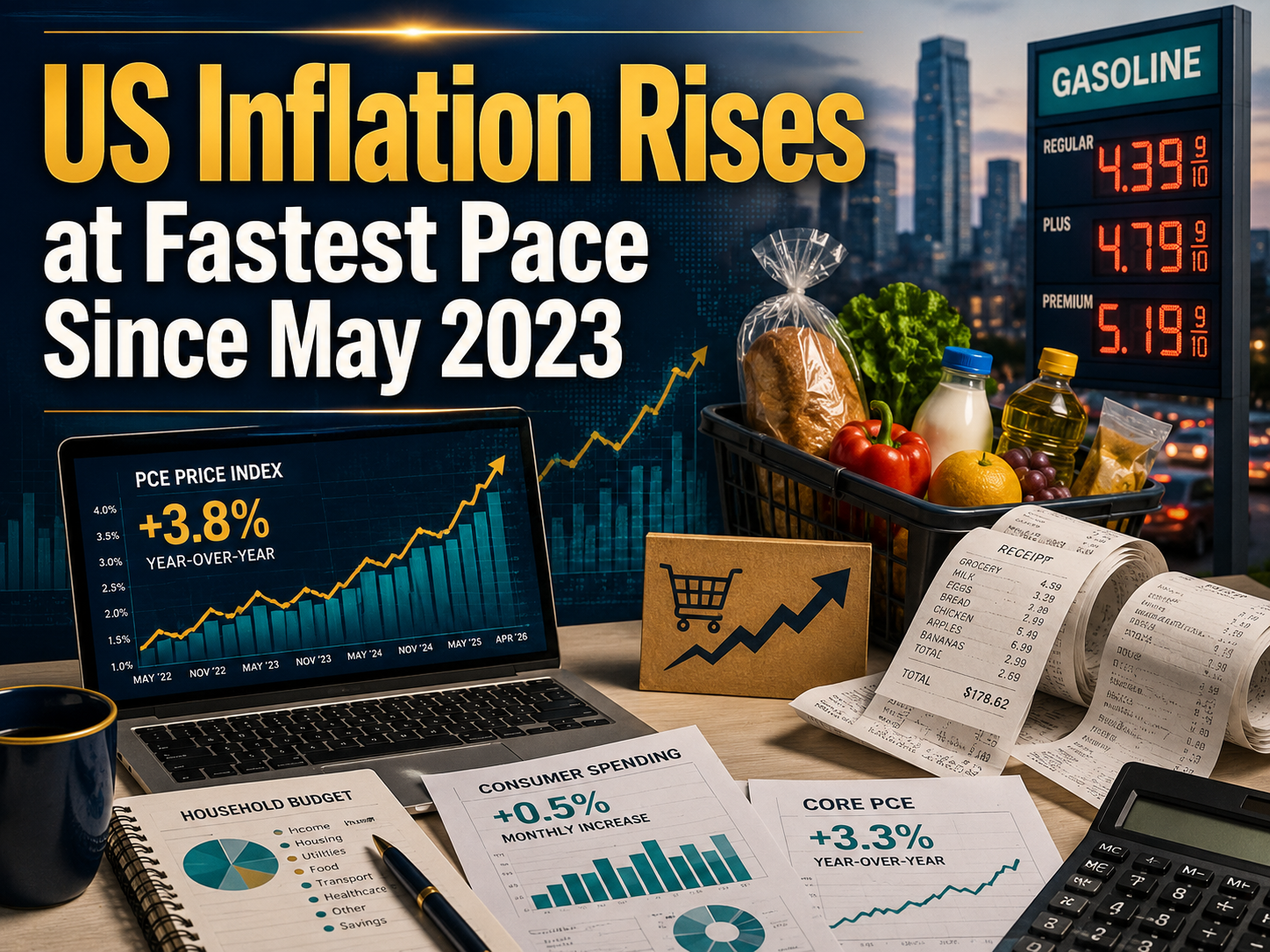
US inflation rises again, and many families and businesses are feeling the pressure. According to the U.S. Commerce Department’s Bureau of Economic Analysis, the Personal Consumption Expenditures price index, often called the PCE price index, rose 3.8% in April 2026 compared with one year earlier. That was the fastest annual increase since May 2023. (BEA, Just the News)
The PCE price index is important because it is one of the inflation measures that the Federal Reserve watches closely. While many people know the Consumer Price Index, or CPI, the Fed often pays special attention to PCE because it tracks a wide range of goods and services and can reflect changes in consumer behavior. In simple English, it helps show how much more people are paying for daily life. (BEA)
Why US Inflation Rises Matter for Consumers
In April, prices rose 0.4% from the previous month. That was slower than March’s 0.7% monthly increase, but still enough to keep inflation worries alive. When food and energy prices are removed, the core PCE price index rose 0.2% for the month and 3.3% from one year earlier. Core inflation matters because it gives economists a clearer look at longer-term price pressure. (BEA, Reuters)
For regular consumers, these numbers are not just statistics on a government website. They show up at the gas station, the grocery store, restaurants, and monthly bills. Reuters reported that higher energy prices played a major role, with the national average retail gasoline price rising 12.3% in April. Goods prices also increased, while food prices rebounded 0.5%. That means many people are paying more for things they cannot easily avoid. (Reuters)
Spending Goes Up, But Real Income Goes Down
The report also showed that Americans kept spending, but the picture is not as strong as it may look at first glance. Personal consumption expenditures increased by $111.1 billion, or 0.5%, in April. However, after adjusting for inflation, real consumer spending rose only 0.1%. In other words, people spent more money, but much of that increase was because prices were higher. (BEA)
Disposable personal income, which means income after taxes, fell 0.1% in April. Real disposable personal income, which adjusts for inflation, fell 0.5%. That is a key point for English learners to understand: if your salary stays the same but prices rise, your real income goes down. You may have the same number of dollars, but those dollars buy less. (BEA)
Savings Fall as Prices Stay High
Another important detail is the saving rate. The BEA reported that personal saving was $611.7 billion in April, and the personal saving rate fell to 2.6%. Reuters noted that this was the lowest level in about four years. This suggests that some households may be using more of their savings to keep up with higher prices. (BEA, Reuters)
For businesses, this can become a serious issue. If customers spend more on fuel, food, and basic bills, they may have less money left for restaurants, travel, technology, clothing, or entertainment. In business English, we might say that inflation can squeeze household budgets and put pressure on consumer demand.
What This Means for the Federal Reserve
The Federal Reserve wants inflation to move closer to its 2% target, but April’s numbers were still far above that level. Reuters reported that many financial markets expected the Fed to keep its benchmark interest rate in the 3.50% to 3.75% range for a longer period. Some policymakers were also open to the possibility of raising rates if inflation stayed too high. (Reuters)
This is the difficult part. Higher interest rates can help cool inflation, but they can also make borrowing more expensive for families and businesses. Lower rates can help growth, but they may also risk pushing prices higher. So, when US inflation rises, the Fed has to walk a careful line. It is not a simple “raise rates” or “cut rates” decision. It is more like steering a large ship through rough water—Captain’s note: sadly, there is no economic autopilot button.
Vocabulary
- Inflation (noun) – a general increase in prices over time.
Example: Inflation makes groceries, fuel, and rent more expensive. - Price index (noun) – a tool used to measure changes in prices.
Example: The PCE price index rose 3.8% from one year earlier. - Core inflation (noun) – inflation measured without food and energy prices.
Example: Core inflation rose 3.3% in April. - Consumer spending (noun) – money people spend on goods and services.
Example: Consumer spending increased by 0.5% in April. - Disposable income (noun) – income left after taxes.
Example: Disposable income fell slightly in April. - Real income (noun) – income adjusted for inflation.
Example: Real income can fall when prices rise faster than wages. - Saving rate (noun) – the percentage of income people save instead of spend.
Example: The personal saving rate fell to 2.6%. - Federal Reserve (noun) – the central bank of the United States.
Example: The Federal Reserve watches inflation closely. - Interest rate (noun) – the cost of borrowing money.
Example: Higher interest rates can slow borrowing and spending. - Household budget (noun) – a family’s plan for income and spending.
Example: Rising fuel prices can squeeze a household budget.
Discussion Questions (About the Article)
- What did the PCE price index show for April 2026?
- Why does the Federal Reserve pay attention to the PCE price index?
- What happened to core PCE inflation in April?
- Why can consumer spending rise even when people are not buying much more?
- What does a lower saving rate suggest about household finances?
Discussion Questions (About the Topic)
- How does inflation affect your daily life?
- Which price increases do people notice the most: food, fuel, rent, or something else?
- Should central banks focus more on fighting inflation or supporting economic growth?
- How can businesses respond when customers feel pressure from rising prices?
- What are some smart ways families can manage their budgets during inflation?
Related Idiom
“Feel the pinch” – to experience financial pressure because money is tight.
Example: “Many families are starting to feel the pinch as inflation pushes up the cost of food, fuel, and services.”
📢 Want more practical English through real news stories? Sign up for the All About English Mastery Newsletter here: allaboutenglishmastery.com/newsletter
Want to build stronger English in less time? Check out Mastering English for Busy Professionals.
Follow our YouTube channel @All_About_English for more English tips and practice.
This article was inspired by: Just the News, U.S. Bureau of Economic Analysis, and Reuters


 한국어
한국어  English