

Trump $250 Bill Proposal Sparks Debate Over Money, Law, and Legacy
Intermediate | June 12, 2026
✨ Read the article aloud on your own or repeat each paragraph after your tutor.
A Trump $250 Bill Proposal Gets Attention
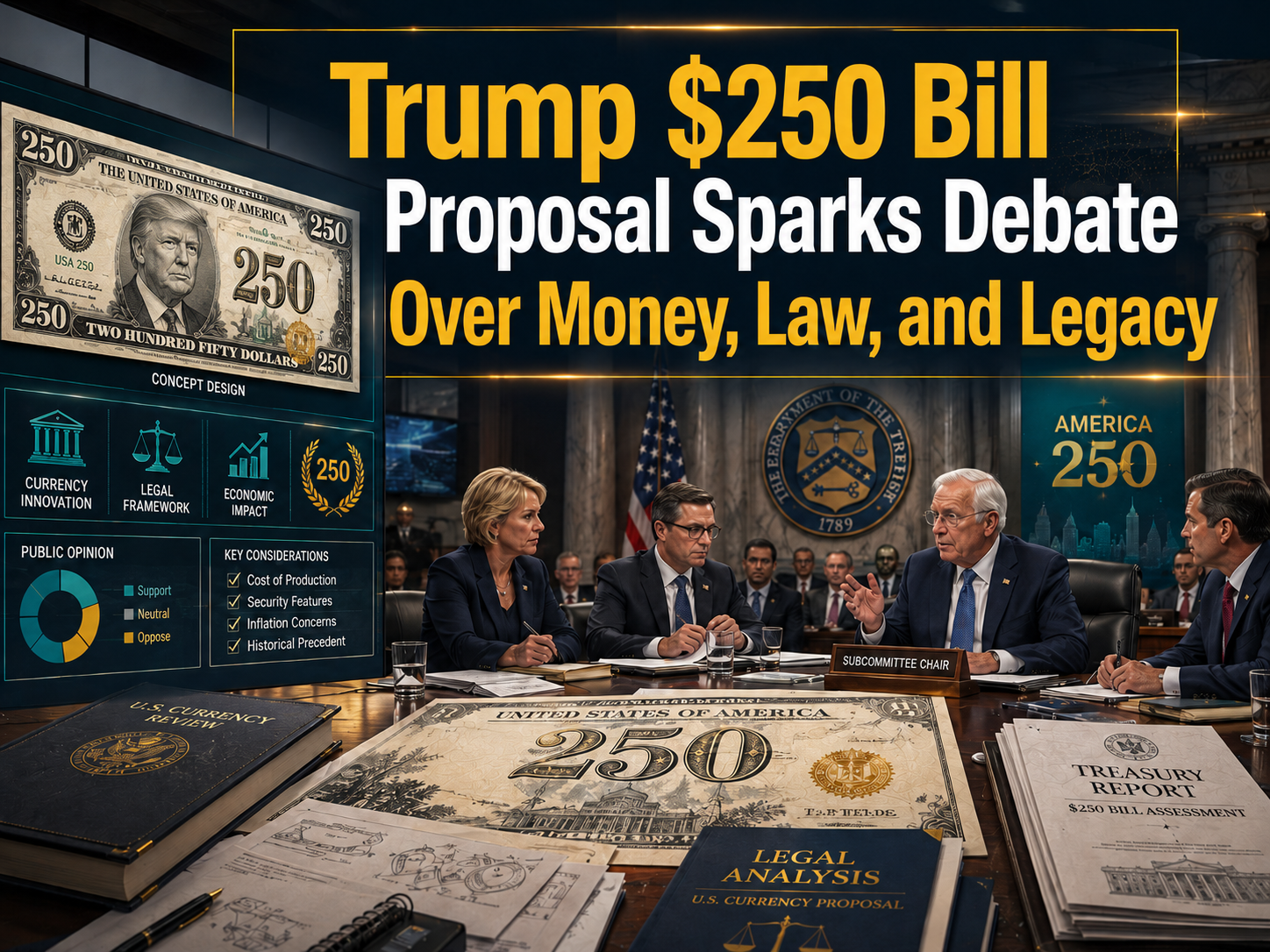
On May 28, 2026, U.S. Treasury Secretary Scott Bessent confirmed that the Treasury Department had prepared a design for a possible $250 bill featuring President Donald Trump. Bessent said the department had taken limited steps because it wanted to be ready if Congress approved the idea. In his words, Treasury had “created the bill,” but the final decision would belong to lawmakers. (AP News, 29 News/AP)
Why the Trump $250 Bill Proposal Is Unusual
The Trump $250 bill proposal is unusual for two big reasons. First, the United States does not currently have a regular $250 banknote. Second, U.S. law says that only deceased people can appear on American currency. That means Trump, who is living, could not appear on a bill unless Congress changed the law. In plain English: Treasury may prepare a design, but it cannot legally print and circulate the bill without new legislation. (ABC News, Axios)
The 250th Anniversary Connection
Supporters say the idea is connected to America’s 250th anniversary, also called the Semiquincentennial, in 2026. Representative Joe Wilson, a Republican from South Carolina, introduced the Donald J. Trump $250 Bill Act in February 2025. The bill would direct the Treasury Department to print a new $250 note with Trump’s image. Wilson said the bill would honor Trump and connect his image to the country’s milestone birthday. (Rep. Joe Wilson, TIME)
Congress Still Has the Final Word
Bessent made it clear that Congress would need to act before the bill could move forward. That matters because changing U.S. currency is not like designing a birthday card. There are laws, security rules, production steps, and political debates involved. According to reporting from Axios, the legislation had not moved quickly through Congress, and creating a new banknote usually requires serious testing and planning. In business terms, Treasury may have a draft on the table, but the project is not ready for launch. (Axios, Treasury Order 101-17)
Critics Raise Legal and Political Concerns
Critics say the plan could blur the line between national symbols and political loyalty. Some reports said officials at the Bureau of Engraving and Printing raised concerns about the legal process. ABC News reported that a living person has not appeared on U.S. currency in more than 150 years, and current federal law blocks it. Other critics argue that putting a current president’s face on money would feel too personal and too political. Supporters, of course, see it differently: they say the bill would celebrate Trump’s presidency and America’s 250th birthday. (ABC News, The Guardian, Business Insider)
What This Means Going Forward
For English learners, this story is useful because it teaches both political vocabulary and business-style language. Words like proposal, legislation, currency, legal tender, and approval appear often in news and workplace discussions. The Trump $250 bill proposal also shows how one idea can move through many layers: a politician introduces it, a government department prepares for it, lawyers review it, and Congress decides whether it can happen. That is a lot of paperwork for one piece of paper money. Government efficiency, ladies and gentlemen—slow enough to make a printer feel ambitious.
Vocabulary
- Proposal (noun) – a suggested plan or idea.
Example: “The $250 bill proposal still needs approval from Congress.” - Currency (noun) – the money used in a country.
Example: “U.S. currency includes bills and coins.” - Banknote (noun) – a paper money bill.
Example: “A $250 banknote would be unusual in the United States.” - Legislation (noun) – a law or proposed law.
Example: “New legislation would be needed to change the rule.” - Commemorate (verb) – to honor or remember an important event or person.
Example: “The bill would commemorate America’s 250th anniversary.” - Legal tender (noun) – money that can legally be used to pay debts.
Example: “Congress would need to decide whether the new bill could become legal tender.” - Portrait (noun) – a picture of a person, especially the face.
Example: “The proposed bill would include Trump’s portrait.” - Circulate (verb) – to move or be used among the public.
Example: “The bill cannot circulate unless the law changes.” - Denomination (noun) – the value of a bill or coin, such as $5, $20, or $100.
Example: “A $250 denomination would be new for modern U.S. money.” - Approval (noun) – official permission.
Example: “The Treasury Department needs congressional approval to move forward.”
Discussion Questions — About the Article
- What did Treasury Secretary Scott Bessent confirm on May 28, 2026?
- Why is the Trump $250 bill proposal legally difficult?
- How is the proposal connected to America’s 250th anniversary?
- What role does Congress play in this story?
- Why do some critics think the proposal is controversial?
Discussion Questions — About the Topic
- Should living presidents be allowed to appear on national currency? Why or why not?
- What kind of person should appear on a country’s money?
- Is currency only about money, or is it also about national identity?
- How should governments balance tradition and change?
- Would you support a special anniversary banknote in your country? Why or why not?
Related Idiom
“Put your stamp on something” – to influence something in a clear and personal way.
Example: “Supporters say the $250 bill would let Trump put his stamp on America’s 250th anniversary, while critics say national currency should stay above politics.”
📢 Want more practical English through real news stories? Sign up for the All About English Mastery Newsletter here: allaboutenglishmastery.com/newsletter
Want to build stronger English in less time? Check out Mastering English for Busy Professionals.
Follow our YouTube channel @All_About_English for more English tips and practice.
This article was inspired by: AP News, ABC News, Axios, TIME, Reuters/Al Jazeera, Rep. Joe Wilson, and Treasury Order 101-17


 English
  한국어
한국어